#400 - Steve Gatena - Co-Founder & CEO @ Pray.com - God, A Revival, Rescuing Lost Men, & Building A Generational Company
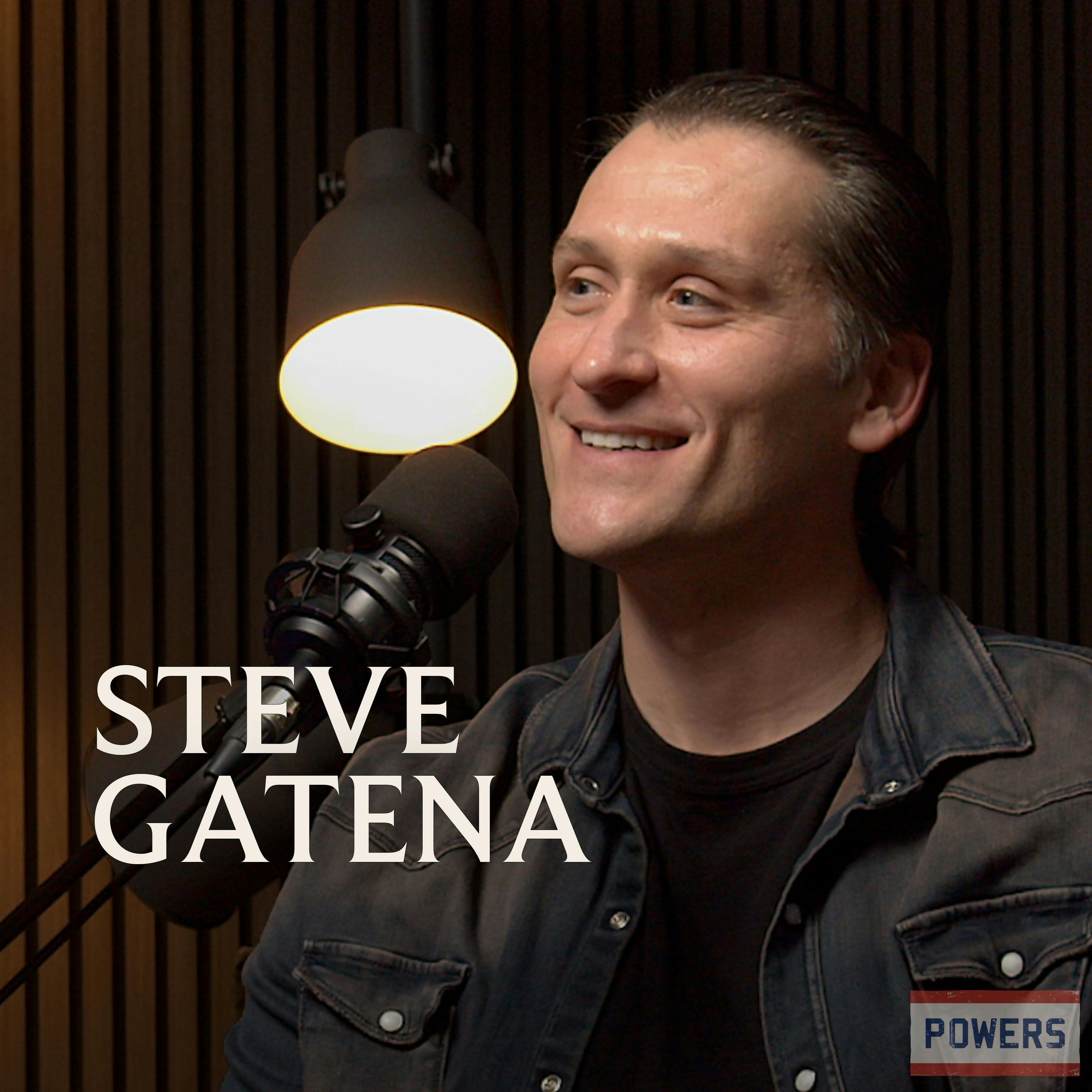


Today, I sit down with Steve Gatena, Co-Founder & CEO of PRAY, for a conversation about faith, leadership, and building a company with long-term purpose. Steve shares his journey from growing up in Los Angeles and playing college football at USC to founding Pray.com and thinking deeply about stewardship, culture, and responsibility. We talk about what it means to lead in moments of tragedy, why community matters more than ever, and how faith intersects with modern business and technology. Throughout the episode, Steve offers a candid look at the frameworks and principles that guide his decisions.
We discuss:
• Steve’s early life, football career, and the turning points that reshaped his path
• Why Hollywood often resists faith and what cultural shifts Steve sees happening today
• The “Mission, Team, Self” framework, and how it applies to leadership and decision making
• Building Pray.com as a sustainable platform across software, media, and subscriptions
• The importance of strong men, building community, and taking accountability
Links:
Pray.com - https://www.pray.com/
Platform Revolution by Geoffrey G. Parker - https://a.co/d/1aNzUXU
Steve on X - https://x.com/SteveGatena
Topics:
00:00 - Intro
03:21 - Charlie Sheen and Hollywood vs. Christianity
10:57 - Pray.com since Charlie Kirk’s death
13:35 - The journey to becoming a hope dealer
19:20 - Lessons playing football for Pete Carroll
23:58 - Developing the Mission, Team, Self framework
33:26 - The America Prays initiative
41:49 - Rescuing men
01:05:37 - How do you know if Pray.com is successful?
01:17:13 - Building a customer data platform
01:25:14 - How do you know if you’re being a successful CEO?
Support our Sponsors
Ramp: https://ramp.com/fort
Collateral Partners: https://collateral.com/fort
Chris on Social Media:
Chris on X: https://x.com/fortworthchris
Instagram: https://www.instagram.com/thefortpodcast
LinkedIn: https://bit.ly/45gIkFd
Watch POWERS on YouTube: https://bit.ly/3oynxNX
Visit our website: https://www.powerspod.com/
Leave a review on Apple: https://bit.ly/45crFD0
Leave a review on Spotify: https://bit.ly/3Krl9j
POWERS is produced by https://www.johnnypodcasts.com/
Chris Powers: All right. So, you just said that you rode down here with Charlie Sheen. He was on the plane. I saw an article of Charlie or maybe a video. He's having a pretty good life transformation right now. And you kind of got to experience that. So, my question is like, how do you know, or seeing Charlie, what about him shows you that he's having a life transformation?
Steve Gatena: I grew up in Los Angeles. I worked throughout production basically my whole adult career. So been around Hollywood, been around actors, entertainers. And Hollywood is not a place that openly embraces God, openly embraces Christianity, openly embraces supernatural experiences. I mean, as weird as people are, they're very against that. Just talking to Charlie, talking about his comeback, talking about some of the changes he's decided to make in his life, and hearing him directly say, hey, I used to be an atheist, and now I'm not so sure. I'm open. I'm open to maybe there's something bigger than myself. Maybe God is real, and maybe second chances are real. And hearing him talk about his comeback tour, it was inspiring, and it seemed very genuine and authentic. That's just not something you get from a lot of Hollywood people. We had the opportunity to produce a podcast called Bible in a Year. The Bible in a Year has done over 100 million podcast downloads. There's a pastor, a local pastor here named Jack Graham. He's out of Dallas, Prestonwood Baptist Church. And the biggest promoter of that podcast is Khloe Kardashian. She promotes it every week on Instagram. Khloe Kardashian is not involved in the podcast. She's not like an investor in our company. And she's promoting Jack Graham every single week on Instagram. She likes all the posts. She shares the podcast out. She promotes it as part of her daily routine. So when I see these dramatic cultural shifts happening somewhere like Hollywood, I go, God's got to be doing something. Because that wasn't something that was in the script, that wasn't in the water, it wasn't in the culture there. There is definitely something supernatural taking place.
Chris Powers: Why do you think Hollywood is so against God? Is it because to believe in God, you have to believe less of yourself and the whole Hollywood shtick is like you are the main, like you are God basically, all these actors are built up or it's in the water over there?
Steve Gatena: There is a lot of what the Gen Zs might call main character energy in Hollywood. So you are the main character. But Los Angeles is, it's such a unique place. And it's a place where people come with big dreams. It's always sunny. The weather's perfect. The place is beautiful. The people are beautiful. And the entire community is really built on the entertainment industry. And if you say, what is the entertainment industry really? Well, it's a bunch of people that are pretending. They're pretending to be something that they're not, and they know that they're pretending. And what is the people around that industry? Well, it's a lot of people that move there with the dream to be somebody that is an actor, an actress, to be somebody that is pretending, but they're not actually that actor or that actress yet. So they pretend that they're the actor or the actress, maybe they're the waiter, maybe they're the Uber driver. So then you get this next layer of the most successful people are the people that are pretending. And then the next layer of people down are the people that are pretending to be people that are pretending. So, there's a lot of pretentiousness in Hollywood, and it kind of coalesces around this main character energy, this I want to be the star of the show. So, I think there's a lot of magic in that. There's a lot of innocent wonderment when it's at its best. But when it's at its worst, it's materialism, it's selfishness, and it's I'm the writer of the script. I think that that sometimes prevents us from being able to access God's plan for our life and really explore, am I honoring God? Am I glorifying God? Am I loving God? And am I loving others?
Chris Powers: I don't know Khloe's story. I kind of know Charlie's just from afar. But I would imagine, maybe you know more about Khloe's because she’s sharing that podcast. Was there, did Charlie even mention like there's a moment? Because you tend to meet God at your lowest. If you haven't been chasing him or wondering, you don't usually meet him when you've just won a huge video award or something. You tend to meet him when you're empty.
Steve Gatena: Yeah. He didn't really mention a very specific conversion experience type of a moment, something you'd hear in a testimony on a Sunday at church. But one of the things that we did talk about was when he was on Joe Rogan a couple months ago and he was recording the podcast, he said, about halfway through, we had to stop and take a break and go to the bathroom. And during our break, the producer of the Joe Rogan podcast told us that Charlie Kirk was just assassinated. And Charlie Sheen said, I never even heard of this guy, Charlie Kirk, before. I really didn't know who he was. And this was this kind of crazy thing that was breaking news during the podcast recording. And so, he said, after that, I started exploring, who is this guy? And he said, I'm looking, this guy's like a kid. And he's got a family and kids. And this sounds crazy. He just got shot for speaking publicly about what he believes in. And he said, after watching videos of him, one of the things that I thought was really special about Charlie Kirk was how he could connect with people that really seemed to not like him, that really seemed to disagree with his beliefs and how he could relate to them on a human level and create genuine connection and start to bridge a divide from somebody that seemed to be so far away from whatever Charlie Kirk's beliefs were. And he said, I started noticing that about him. And I think that's a really special thing. So, I think that might've been, I don't want to speak for Charlie Sheen, but I think that might've been a potential pivotal moment for him as well.
Chris Powers: I think it was for a lot of people, and whether you are new to the faith or you've been in the faith for a while, it definitely was a culture shifting moment. Like I would be curious, and we'll get to the business you run today, but through your view of the world, like how has that moment, what have you seen? Like, what has happened to Pray.com since the Charlie Kirk movement? Like what are you seeing happen since it's, what, been two or three months now? Is it something like you've never seen before? Is it just business as usual again? Or is there clearly something moving?
Steve Gatena: I was in a meeting that day when that happened. I was in a Zoom meeting. And Charlie Kirk is an investor in Pray.com. The Kirk family is an investor. And Turning Point was also a customer of ours. And so we got notified pretty much real time. And my first instinct was just, I hope he's going to be okay. And then after watching the video, I had the same reaction that probably millions of us had, which is this is just absolutely horrible, absolutely devastating, like what a tragedy. And I've been through tragedies before, but I couldn't imagine what his whole family is experiencing and all the people that work with him. And so, I'm going throughout that day thinking, what is our role in this? We're Pray.com. My job is to be a hope dealer. And how bad am I doing at my job, by the way, if somebody wants to kill somebody like Charlie Kirk, a man that loves his family, that promotes family values, that promotes love, that promotes Jesus, that promotes Christianity. I'm thinking I need to step up and do a way better job at doing my job. And then we did our best to honor him and his family and share some of the best content that we had about him to help fortify his legacy. In the days and the weeks and now a couple months following, I mean, we've seen a massive resurgence in people coming back to Christianity. The way we would measure that is app downloads, conversion rates in our app, social media views. I mean, I think we're doing probably like 50 to 70 million views on our social media a month. And before that, it was probably half that. So, we're really seeing things skyrocket for us.
Chris Powers: Okay. You said you're a hope dealer. Let's go back now. When we first were talking, I want to talk about the journey to becoming a hope dealer, but you said something interesting. You said that you thought you were going to spend your career, I think it was taking pictures of the earth. One, like I was a kid, I never even thought about that. So, like how do you even get to a point in life as a young person to go like this is what I'm going to do?
Steve Gatena: Too many alien documentaries.
Chris Powers: Are aliens real? Elon says if they were real, you would hear it from me and then like everything else you read is like there's about to be a bomb dropped that aliens are real. Where do you sit on this issue?
Steve Gatena: I think that. somewhere out there, something is waiting to be known. And that leaves me in this endless state of curiosity. So, I definitely don't have the answer for you. I wish I did. But I'm in that state of curiosity. And yeah, I mean, I believe in a lot of things. So, supernatural being one of them.
Chris Powers: Okay. So, you know that you want to do this, and then you're like, I went up to, I believe Google's headquarters.
Steve Gatena: Yeah. So really to like do a full rewind, I was born in a place called Simi Valley, California, which is like just outside of Los Angeles. It's like a suburb outside of Los Angeles. And I was born to a single Jewish mom on welfare. So my mom is Jewish, which means I'm Jewish. My 23 and Me says I'm Jewish, so I can prove it. And my dad is Catholic. And I was pretty much raised Catholic by my grandma, who used to drag me to church on Sundays. And I hated every minute of it. I didn't want to be a part of it. Really, I loved computers. I got into computers at a young age, and I loved computers. Also, I'm 6’5, so I used to be good at sports. I'm not good at sports anymore, but I used to be good. So I did computers and I did football. That's really what I did. And in high school, I got recruited. I got flown to Washington DC and I was part of this small group of people, of high school students, and they basically pitched us, all these different three letter agencies pitched us on how to use computers in the government. So FBI, DEA, CIA, and one of the people from CIA showed us basically what we would call Google Earth today. And I thought it was the coolest thing I've ever seen, the fact that you could look at people on Earth from outer space with satellites. So I decided when I grow up, that's what I want to do. I want to do satellite imaging. I want to do Google Earth. And after talking with the gentleman that did the presentation, I said, hey, how do I do this when I grow up? He said, oh, you go to Annapolis, the United States Naval Academy, or you go to the Air Force Academy and you major in computer science. I said, great. So that's what I'm going to do. So I decided to go to the United States Air Force Academy out of high school to major in computer science and get into satellite imaging. And my first year at the Air Force Academy, I dislocated my shoulders, collapsed my lung, broke my hand, got pneumonia, and ended up with an honorable discharge.
Chris Powers: How did that happen?
Steve Gatena: So, when you go to one of the service academies, you do basic training. That's your summer before you show up. And during training, I got sick. I ended up getting pneumonia. When you're going through basic training, there's no sick days. You either do it or you quit. I'm not much of a quitter, so I ended up doing it. I lost about 50 pounds in my last eight weeks. I went from being this high school, 6 '5", 250 pound offensive tackle to being like 190 something.
Chris Powers: Maybe a cornerback.
Steve Gatena: I wish I was fast enough to play cornerback, but unfortunately, not that athletic.
Chris Powers: Okay, so you have an honorable discharge. And then what happens?
Steve Gatena: So then I'm basically leaving the Air Force Academy in shame. It’s the first time I realized that my plans for my life were not God's plans for my life. And I'm like, well, I can still play football. So I call up all the schools that gave me football scholarships. I had a couple dozen football scholarships when I was in high school. And I said, hey, can I come play? Can I come play? They basically said, look, bro, you're like a 190 pound offensive lineman, and that's not a D1 offensive lineman. So kick rocks. But a couple of schools were willing to give me scholarships still. And one of them was UC Davis. I said, oh, UC Davis, this is great. University of California, go back home. It's like a D1 school that nobody's ever heard of, but it's actually a really good academic school. I'll go there and then I'll get good grades and then I'll transfer to Stanford and major in computer science.
Chris Powers: I'll get back on the wagon.
Steve Gatena: That's it, dude. That was my game plan. I go to UC Davis, put myself back together, end up starting. I had a great year my sophomore year, and then I get a phone call from USC and had the opportunity to transfer to go play at USC for Coach Pete Carroll. And so I graduated early from UC Davis, transferred to USC, enrolled in a master's program so I wouldn't have to sit out a year and then went and played O-line at USC.
Chris Powers: What was it like playing for Pete? What's something you took from Pete, one of the greatest coaches of all time?
Steve Gatena: In short, it was epic. Like whatever you think it was, it was 100 times more fun than that. It was so fun. It was just, it was crazy. And Pete taught me a lot of things. Really, he opened up my mind to being able to do something better than it's ever been done before.
Chris Powers: In what way? How does he instill that?
Steve Gatena: He'll literally say, we're going to do it better than it's ever been done before. We're going to have a lot of fun. We're going to score more points. We're going to be more perfect in our execution. And that to me was a game changer, because growing up, I'd always had these people that I looked up to. I always had great coaches and great mentors, but the benchmark was always someone else that was at my high school before me. And then it was like, oh, can I be like that guy? There was never this idea that, oh, there's actually maybe a space beyond that for greatness. You can actually do something better than it's ever been done before. You can do it. I can do it. Everybody listening to this podcast can do it if you're willing to put in the work. And watching that and watching how he fostered that environment, that environment that we worked in really, like that's how I would frame it now, but that we were playing football in was one of very high standards and it was also one of very high praise. So one of the things that I do at our company Pray.com is we have a daily stand up every day and we go around and every person in the company gives a cheers, we call it a cheers, to someone else in the company for something that they saw them do yesterday that was good and in alignment with our core values. We have five core values. They spell Dream. And this idea of daily encouragement and daily praise for you doing a good job at your job, that was really something I took away from my experience with Pete Carroll. If you scored a touchdown, he would celebrate you, even if it was your job to catch the ball and you're wide open. If you hit a block, he would celebrate you, even if it was your job to hit the block. And what I realized was the environment was so positive, it was so fun, and it was so energizing because it was full of praise. Because he's definitely going to tell you when you miss the block. And he's definitely going to tell you when you drop the ball. So that's not absent. But are you being equally as intentional about praise as you are about criticism? And that was really something that I think I've tried to carry into my companies as an entrepreneur.
Chris Powers: Yeah, because especially startups, like it's not that a lot goes wrong, but it can be really stressful. And the culture can become stress.
Steve Gatena: Absolutely. And I think that when you have frameworks for how to operate in the stressful environments and you can teach those frameworks and reinforce those frameworks, it really helps you succeed. Like one of the frameworks that Pete had when we're playing football was, he has these three rules. So the first rule is protect the team. And no matter what, you do everything you can do to protect the team. The second rule is no whining, no complaining, no excuses. And the third rule is be early. And he will beat those three rules into you. I mean, like I can't even believe I just remembered them actually because I haven’t played football for almost 20 years. That's like a framework. At Pray.com, we have something we call mission, team, self. And I really hit on that with the company and we use it and we talk through it. And every time we have problems, we work through our frameworks. And I think that if you have a framework for life, you'll never be lost, even when you're in the unknown.
Chris Powers: And is your job as a leader, do you ever get the feeling that sometimes... how you put them into practice? I guess from the standpoint of, you talk to some people and they're like, we have values and we have culture, we have all this stuff, but it's kind of like words on paper. What you're talking about is like frameworks that get people aligned and get people going. What's like an example of like how that mission team, was it mission, team, player? Mission team self. How does that like play out throughout a day or like somebody's job?
Steve Gatena: Yeah, so, let's work through a real example of your business. What's like a big goal or opportunity or problem that you're dealing with right now?
Chris Powers: Yeah. A big goal would be acquiring real estate in DFW, I'll just pick, one at scale.
Steve Gatena: And what kind of real estate?
Chris Powers: Industrial.
Steve Gatena: Okay. And so what's the mission of your company?
Chris Powers: To be the best real estate operator in the world.
Steve Gatena: Okay. So tell me more about what that means to you.
Chris Powers: That means from, a lot of people in this world talk about just buying real estate. But once you've bought real estate, you have to own that piece. People say it's passive, it's not passive. There's a million things that happen over a five year period of owning something from little things like getting buildings painted, lawns being done, tenants paying rent, insurance being bought, not only bought but bought at the right price, which can take a lot of time and learning over time. That's fixing roof leaks. That's fixing tenant complaints. There's just like lots of little things. And so, when you talk to people that are just drowning, they are so enamored by doing the deal up front, but not running the asset, or in company making a lot of the headlines is always so-and-so raised 50 million. There's never the article of like, well, how did they operate over the next 10 years to turn it into something? And so, for us, that would be just day-by-day decisions to get the most out of each property, to keep tenants satisfied, to keep costs down, to keep revenue going up, and having a mentality of, how do we get the most value out of this property? And a lot of that's going to come from a lot of tenant satisfaction and you also have bills to pay. And so, are you getting your cost structure right? Are you able to negotiate better? Do you know what a bad contract looks like versus a good one? And so, when I think of being the best operator, it's really getting the team's mentality to we don't just buy things. We have to operate them really well. And when you look at, not just in real estate, but in any business, the greats are really good at operating. The headline’s fun to talk about, but it's like what happens in the middle that kind of defines you that's not where you really get the accolades. And so, it's just training our people to understand our real job starts while we own it.
Steve Gatena: And so when I listened to that, I go, okay, so Chris wants to be the best operator in the world. And I hear a lot of language around operating the property the best. And then separately, you talk about taking care of the tenants. And then separately, you talk about, do you know how to paper a good deal, a bad deal, a good lease, a bad lease? So those are examples of really when you say operating and you're talking about the margins and the cash flow on the asset, that's team. But then you said tenants, that's mission. And then, are you good at papering a lease or not good? That's self. So, then I go, oh, like immediately when I listen to Chris, I go, oh yeah, Chris is, he's team, then mission, then self right now. And so how might we reorient that? And I'd say, hey, Chris, let's change our language so that we are always tenant first, because your mission is to be the best operator in the world. And I believe for you to be able to actualize that mission, you have to be the best landlord in the world that serves your tenants the best. Instead of reacting to fix the building, the building never breaks. How do we make a building that never breaks for our tenants? How do we make it so that our tenants never have to worry about flooding because everything's graded properly and the drains are clear? How do we make sure that no tenant ever worries about rain leaking through and messing up all their product inventory or their equipment? And that's mission. And that's how we're going to focus this business. And you go, and you as the leader, if you wanted to embrace that mindset, you go, that is our new standard. That is like the Fort Capital standard now. And I'm going to embrace it. And if I'm not embracing it, I want you to call me out on it. And I'm also going to hold you to that standard now, too. Now, we're not just doing a nonprofit. So, I'm not buying fancy beanbags and soda machines and giving away money. This is a business. We are mission first, but margin also matters. So we're mission and margin. So now let's talk about team. Who is the team? Team is anybody that owns shares in the company or LPs or however you structure your business and anybody that's getting a paycheck. That's the actual team. And so the team formula is really simple. Revenue minus expenses equals profit. So you want to prioritize the team. You make revenues go up, you make expenses come down, you make profits go up. That's the team formula. It's not magic. If you really want to get advanced on team, you move from the cashflow formula and you can move over to the enterprise formula or the enterprise value formula or brand, or in your business, maybe it's called equity. And we go, oh, well, we did this thing and maybe it didn't change revenue minus expenses equals profit, but it made the property more valuable. And in my company, it'd be like our brand is more valuable because I have this digital property called Pray.com. So that's part of team too. And then you go to self. Self is like, do you suck at doing leases, or are you good at it? Do you know how to do the little calculator on the net operating income, are you good at it? Do you personally get satisfaction out of your day-to-day task list, or is it draining for you? Because we got to optimize on the self level too. And if we can prioritize the mission, then the team, then the self, and care about all three, we can build something that is long-term, that is sustainable. And when we're in a space of the unknown or confusion, should I buy this property? Should I not buy this property? Let's change the dialogue so that we talk about all three perspectives. Hey, Chris, I see that you want to go buy that property in the stockyards. Explain to me how it makes sense from a mission perspective. Oh, well, it's like they renovated the whole place. There's this like super fancy hotel down there. There's a bunch of traffic in and out. Amazon needs like a fulfillment center there. We can make this the coolest place for the coolest customer to want to rent and work. And it's going to be a blast. They're going to love every minute of it. Cool. That makes sense from a mission perspective. Now, show me the numbers. Make it make sense from a team perspective. Oh, well, revenue minus expenses actually equals losses on this property. Doesn't seem like it makes sense. Okay, well, what about from a self perspective? Well, I just love this area. I grew up here, and the way the sun rises in the east and it sets in the west is, it's really special. And okay, so you want to do it, and maybe it makes sense from a mission perspective, but it doesn't make sense for a team perspective. We got to kill the deal.
Chris Powers: And on the other self, it could also be, do we have the skill sets on the team? Because do you run that at the team level or could it be we don't- profit plus expenses, minus expenses equals higher profit. And then you go down to self. But you could also run a world where it's like, but we don't have the talent on this team to run this beautiful hotel. We've been industrial people or something like that.
Steve Gatena: Yeah, you totally can do that. Or you can just say, you know what, I don't like that. We have a competency at Pray.com that is building podcasts, that is producing podcasts. There are a lot of types of podcasts, true crime, interview style podcasts, scripted narrative monologue drama podcasts. We have a competency to produce all of them. Chris, some of them, I just don't like it. So, it's okay for you to do a mission, team, self analysis. And for somebody in the company, a leader in the company to just say, hey, look, like I don't like it. And that doesn't mean we're not going to do it, but we can have a discussion about it. And it's okay for you don't like it to be the reason you didn't do it. You're not required.
Chris Powers: Can you walk me through that process, something related to your business?
Steve Gatena: We have the honor and privilege of doing a campaign in 2026 called America Prays for the White House. So the White House called us up and they said, the president wants to get a million people a week praying. The president believes that faith and prayer is mission critical for the success and thriving of our country. And so, he wants you guys to lead an initiative called America Prays for the America 250th birthday celebration on the 4th of July. And this America Prays initiative is going to go from January 1st to 4th of July. So first, what an honor and a privilege to get that call. It's awesome. And I really think that these kinds of things happen for us all the time. And to me, I go, oh, this is like divine intervention. This is like providence. We don't deserve this opportunity, and we're going to answer the call. And so then I go, okay, for America Prays, what's the initiative? Is it to stamp Pray.com on America Prays, on everything we can do for America Prays, so I can get more podcast downloads, sell more subscriptions, sell more software to churches? Well, let's talk about it from a mission, team, self perspective. What's the mission for America Prays? It is to get more people praying in America. Okay. We didn't get specified what kind of people, what denomination of people, is it only people in Fort Worth? Is it people in Los Angeles? No, all Americans, all people. So I go, okay, step number one is I have to try to be as inclusive as possible. So probably I'm not going to be stamping Pray.com on everything around America Prays. Also, how do I be inclusive? I have to pick up the phone and start calling leaders from denominations. I have to start calling people at the Catholic Church. I'm not Catholic. I'm a Christian. But I have to do that. That's my responsibility to steward this thing. So we start having this conversation from a mission perspective. Then we dream up a bunch of big ideas. Wouldn't it be cool if we got a bunch of 18 wheelers and buses and we went to all the colleges all over the United States to do America Prays? Okay, but that's going to cost us like $30 million. And so, revenue minus expenses equals profit. So now, okay, now let's think about it from a team perspective. How do we make this work as a business? If we're going to take on this responsibility and steward this and win on the opportunity, how do we do that? How do we do that in a way that makes sense? And then we get to the self. Is there a spokesperson for this? Who's going to be in charge of this? Who's going to- do we have the talent to do this within the organization? And we work through that whole stack. And I do that with my leadership team. And everybody's got a different perspective. And as we do that, what happens is these projects, they evolve. The strategies and the tactics, they really get robust and they get strengthened. And it allows everybody to have a diverse perspective. So, we get that, we get to use diversity. A lot of people think diversity means your skin is black and my skin is white, so we're diverse. No, it's cognitive diversity. You think differently, I think differently. You're a ENTJ on the Myers -Briggs and I'm like something else. So, let's use all that. Let's use all those giftings so that we can strengthen each other, so that we can strengthen the organization, so that we can strengthen the mission and serve people better.
Chris Powers: Can you share how Pray.com is going to lead this initiative forward?
Steve Gatena: Not yet. I can't disclose too many details, but what would you want out of America Prays? You're an American and you pray. So what would you like to see?
Chris Powers: I think for people that pray already, and you talk to a lot of people, they pray, a lot of people, they get up early. They pray at night. They pray with their families. I think the biggest shift is, one, like education, like how do you- to be able to pray, you got to kind of know how to pray. And I don't think God judges us on our prayers, but a prayer shouldn't just be like, God, I need this, I need this, I need that. It's not a request list to your creator. So I think understanding like God's design for prayer at its most fundamental level would be good if we're talking about educating an entire country. And then the second would be once they've learned, maybe, obviously through the app that you have, obviously you already have it there, I've been on the app, materials on here's some prayer material that you can use. You can come up with your own, you can use ours. And then, I think the third, and maybe this isn't, I think it's as important, is trying to get people comfortable with praying with each other. God wants us in community together. Life as a Christian alone is not really a life as a Christian. I mean, God's very upfront that he wants us in community with others. And you talk to a lot of people, even watching Charlie Kirk's episode and kind of watching X the following days when everybody was like, I'm going to to church for the first time and whatever. I think a lot of people feel like if they're not there yet or they haven't been praying or maybe they're not a believer, this whole idea like, man, I got to clean my act up for like the next year before I go approach God again. And God's kind of saying, nope, it could start right now. And I think the easier way for it to start right now for a lot of people is, one, knowing who their father is, knowing how to pray, but also a really easy way to get in a community with other people. Because when you get in a community with other people, you realize really quickly walls come down. We're all sinners. We've all got issues. It makes it a little more inviting. I think some people think Christians have it all together. Sometimes what we believe in the most, we're not great at showing other people. We're sinners. We're in need of a savior. We're going to screw up. That's why we're here. And so, I think if I was trying to educate a whole generation, I would want them to know that and know Christianity isn't about being buttoned up and approaching God with all these things that you're going to go do. It's kind of admitting like, Lord, I'm a sinner, I need people to walk with, and I need to learn more from you. I don't know if that was a good answer.
Steve Gatena: I mean, that was great. That was powerful.
Chris Powers: So educate me on how to pray. Educate me on who God is and what prayer can do for my life, maybe how to pray. Offer me educational materials. For a lot of people, that's just a Bible, but one of the greatest things this generation has going for it, and you mentioned this earlier, you hated going to church as a kid. I think all of our generation did. Church was so stale... I was talking to somebody the other day, you see some of these Bibles now, you can't wait to open it. There's pictures. It's cool. You open those pew Bibles from the church, and it's like opening up a cardboard box. I mean, it was as boring of a thing as you could read. Just service was boring. And we live in a world today where believing can be also entertaining and can be a lot more fun, I guess. So, provide me those materials. And then once I've built the confidence of who God is, how to pray, I've learned more, the third step would be, please help me get into community with other people or show me how I could do that.
Steve Gatena: And so if we were to say, Chris, we have limited resources for this, and we can just make up a number of what amount of capital that means, what groups of people would you want to prioritize the most for a campaign like this? Kids, adults, people in cities, people in rural areas, rich people, poor people? How would you think about that?
Chris Powers: Is there a right answer to this?
Steve Gatena: I don't think so.
Chris Powers: I think one of the biggest issues in America right now is the decline of kind of just men in what we've been taught over the last 20 years. And you kind of watch when a man stops being faithful, starts declining, starts trying to be maybe more feminine or not live by rules of masculinity, like everything else starts breaking beneath it. So, for my own heart, one of the groups I think that need to be reached are men because I think when men strong, they're better to women, they're better heads of the household. It kind of starts with a healed man, if that makes sense. Now this could get some flack and we could debate, there's lots of different groups. The short answer is reach everybody. But if we had to pick a group that I think has the most impact, and I've seen this in my own life, I've seen it with a lot of the men I walk with, a healthy man really radiates to the people around them.
Steve Gatena: And who are those people around a healthy man? Who do you see them impact?
Steve Gatena: A wife, their kids, their co-workers, their community. But let's not get too broad. Let's just start at the household formation. And if you don't have a household formation, a strong man is also probably more likely to get married and build a family. So you're probably on the road. The fracture of the American family has been going on for a while. People aren't getting married as much as they were. They're not having kids as much as they were. Now we could talk about whether that's for costs, but I don't actually believe that's the real reason. There's data that show that women don't respect men like they used to. And what's the most famous app in the world right now is like Only Fans, women, like we've democratized basically prostitution. And I think a lot of that stems from like weak men. I think weak men allow this stuff to happen. Then you can go to other countries. You see wars typically happen by crazy men. Women don't start wars, men do. And it's not just the men doing it, it's the men being complicit with the men doing it. And so, I personally think we bear a lot of responsibility. I know the Bible says that we do, not in a way that puts pressure that's just going to break us, but puts pressure on us to say, I don't have it all. So, I need you. And once a man can kind of get there, I just think it can help a lot of people around him. Now that's not saying a healthy woman isn't needed or healthy women wouldn't be great. And I'm not really going to backtrack or give a political correct statement. That's where I see the biggest issue in America right now is with men.
Steve Gatena: And so, who are some of the healthy men that you've had in your life? And what are some of the biggest lessons that you've learned from them?
Chris Powers: Oh man, my entire- one of the things I always say, God has given me so many incredible men in my life that I don't deserve, people that you and I know, we know lots of them. We won't go down the list. If they're listening, they know who they are. Men that are in their 70s. I've got a gentleman who's been on this podcast, mid 50s, been walking with him for 15 years, not listening to him I joke for the first six or seven. My dad. What do they have? They're consistent. They can walk what they call the narrow road. And that doesn't mean they're perfect. They know they are a sinner. They know they're in need of a savior. That posture alone in life changes everything. They are just naturally more humble. They are more generous. They're more patient. They're more gentle. That doesn't mean they're weak. Some of these men could tear your head off, and they're out hunting right now probably in Africa to kill an elephant. They listen, but they also stay kind of to the truth. So I think for me, what great men in my life have done the most for me is once I know I'm sinning or I've done wrong, naturally we can kind of build a case around that. Even though we know in the back of our head I'm not right, we'll build a case around ourself. A really strong man like won't bend on it. They'll kind of be like yeah... we can sit here for the rest of the day and you can try and convince me that- but they're pretty consistent. And I think one of the scariest things a man could have is a man in their life that is mostly consistent, but then occasionally like, yeah, I get it. Which is nothing biblical. It's more just like, I'm going to let you just kind of do your thing. And if you really respect that type of person and you take that to heart, you can see men make really stupid decisions because somebody they respected kind of gave them a pass on something.
Steve Gatena: Yeah. You don't have those friends that really hold you accountable.
Chris Powers: Correct. To the truth. There's one truth. The problem is, in this culture today, and I've fallen in this probably daily, probably hourly, I want to bend God's word occasionally to my will. And we've grown up in a society today where even the people in the pulpit, they don't preach some parts of the Bible because our culture doesn't want to hear it anymore. And I think I read More Than a Carpenter. I've read Reason for God. More than a Carpenter had a bigger impact on me. But one part that really stands out is kind of like you bending God's word to the way you think it should be is yourself making yourself God, is you saying, look, I've looked at all the facts in this tiny little world I live in with this tiny pea brain, and I think God should have said it this way, and that would make more sense, and therefore that's the right thing. That is diminishing the vastness of God, what he's capable of. And so, I tell people, and I tell myself this all the time, I'm like, am I making myself God again? Where you talk to, it takes a lot of faith to be an atheist. Everybody's got a God. Nobody believes in nothing. It takes a lot of faith to believe in nothing.
Steve Gatena: And be certain of it.
Chris Powers: And be certain of it. So yeah, that's kind of how I would describe some of those men.
Steve Gatena: Yeah. I started writing this daily email and now we have like a whole team that helps to write it. But in the beginning of building this email, we really wanted to speak to young men, guys that were about to get married, guys that were going to become new dads. And one of the things I felt was missing from a lot of the media is the message that you're loved. You are loved unconditionally by God. You are loved. You are capable. You can get out there and do stuff. You're capable. And also people need you. Your community needs you. Your family needs you. People need you to go out and go to work. People need you to go out and fix things. People need you to go do a good job. And I think that a lot of the media that is thrown at guys today is we don't love you, you're not capable, and we don't need you.
Chris Powers: Quit being a man.
Steve Gatena: Yeah. How do you think that makes somebody feel at the end of the day when you're blasting them with that messaging constantly for years? And I think that's super unfortunate, and I think it results in these tragedies, these shootings, and hopefully we can do something about it.
Chris Powers: You know Joby Martin, I'm sure.... He's the best.
Steve Gatena: I love Joby.
Chris Powers: He did a, he actually did a three hour deal yesterday with the launch of his new book. And I was watching it and I'm not going to say it exactly how he says it, but he basically says God created man and woman, and to attack who a man is a direct attack on God, because we're made in his image. And the pendulum swings. We're humans. We do a good job of screwing it all up. But I've just been fortunate, and I know you have, to just be in some really interesting situations with some really incredible men that, by the way, a lot of them were total boneheads at points in their life. This wasn't like born at birth perfect. That is not like the story here. A lot of it is kind of them learning along the way like who they are and who they're not. And for me, like a huge part of my kind of story was starting to understand who I'm not. Because when we kind of grew up, especially as a man, you're kind of made to like pull up your pants, sack up, take it on the chin, shut up and just like keep pushing. And for someone like me, you can really build that complex up to where it’s like, I don't need any- I just need to keep grinding on my- I can get this. Because that's kind of what we tell little kids even, like when they're little, probably not even meaning to do any harm.
Steve Gatena: Yeah. It's funny. I don't really talk about my kids that much and they're very young, but we're doing solids now with my twins.
Chris Powers: What’s that?
Steve Gatena: Like, purees. So, they're eight months. And my son was, he was like being kind of fussy. And I kind of said something back to him, and my wife was like, don't do that. Like he's a baby. And I'm like, he's a boy. He needs to be tough. She's like, no, he's a baby. Give him a hug, give him a kiss, tell him he's a good boy. And I'm like, oh, okay. So, when you get that kind of toughness mentality ingrained in you, and then you just kind of project that, I think it limits the development. It limits the growth. At least I've been limited. My EQ is not where it should be.
Chris Powers: I've got two daughters that are older, so those are my first two. And then you have my son's my youngest, and it's just two different parenting, just like innate. So anyway, yeah, we tend to... The cool thing for men, though, is, again, I just think there's such an opportunity for them right now. So if I hope you reach a category, it would be men. And if I had to dissect within men who, just like not being biased, but people that have a lot of influence and are over quite a bit. Although, I think all men need it. Men that are in high positions probably need it the most because it gets more lonely. And we've seen, like we've seen even, we don't have to name names, but you often see men, even pastors and just people that we think are just amazing and they kind of keep it all together until the end and then they just do something super stupid. And you're like how did- you had all the- especially some of these mega pastors, you're like, how does that actually happen? What you've been preaching for 50 years is like what got you. And I think the common thread is like they become more alone or they become isolated with just like yes people or people that really won't call them on their BS anymore. And that's how you see some of the greats topple. And so, maybe going back to what being in that community or having a small group is, I think one characteristic that all these men that I described have in my life, they have great inner circles of somebody they can pick up the phone and call almost immediately. None of them are just lonely introverts that know nobody. They all have a solid four or five people.
Steve Gatena: Yeah. And a lot of the people in their group are, they're battling similar challenges. So to your point, as you kind of ascend in a career, if you have the privilege to be able to become a pastor of a megachurch or a CEO of a company, your reality starts to look a little bit different. Your world starts to look a little bit different. And it can become much more difficult to curate a community of people, not only that are where you are, but that have been where you want to go, that can kind of help you along the way, not make as many of those bonehead mistakes that we all make.
Chris Powers: And you've been in YPO. I know you're in YPO. We get to luck out. Like I remember walking into forum for the first time. I was 28 and our forum’s been around 40 years. We have an incredible group. Confidentiality was like preached to the highest. Like this is the one thing you don't break. And I was told going in like just be real transparent. And I remember writing like my first update, it had like zero transparency. And I'm sitting across the table from this business giant that lays out something. And it was like the first time in my life I'd ever been like, oh, wow, people, this is... this is transparency. It's been 10 years now, so it seems a lot more natural. But it also made me realize like it took me to 28 years old to really understand what it's like to be vulnerable and tell somebody what's going on. That's a long time.
Steve Gatena: It's a long time. And I think that's also part of why we have a mental health epidemic in the country. Because think about how we grew up – bikes, friends, doing things outside. But now the kids don't even have that. It's home alone on a screen. So if it took you until you were 28 to be able to open up and be vulnerable and get real, and you grew up with great parents.
Chris Powers: Maybe to my dad, I was able to be vulnerable, but outside of that, yeah.
Steve Gatena: And so then think about what's it like for a 14 year old today. Like if it took 28 for you, what's it going to take for them?
Chris Powers: One thing, and I think part of, quote unquote, being a man is also knowing that you can be vulnerable. You wouldn't read that in the news. And I don't even know if this is tied, but it made me think of this, in that conversation I was listening to yesterday with Joby, one of the things he says often is, we're the only culture in the world, well, we had it up until, he says, about 80 years ago, where there's no like defining moment of when a boy becomes a man. Like forever, men were described or males were described as boys and men. That is like how the world has been talking about males for eternity. You got a boy, you got a man. You go to almost every other country and culture in the world, there is a defining moment, that can be a ceremony, that can be like in certain tribes they'll like send the kids out to go hunting and until they've caught a lion or something and come back, like they stay out there until... In America, there's not that. I know guys, there's that intentional father book that will take their son on like a trip or a one day outing and kind of have that conversation and kind of say... you're a man now. But I think that's also a problem. I never really thought about it that way. It's like in our culture, like you don't- And then we go look at like what were men doing 80 years ago? Men 80 years ago were like getting ready to go to war. You talk about the male of 80 years ago, by 19 years old, these guys were like on the battlefield. Not judging our 19 year olds today, but it looks a lot different. And there's something to that, that there's not a defining moment that like boys kind of get told like it's time to be a man. And oh, by the way, this is kind of what being a man should mean to you.
Steve Gatena: And so then what's our responsibility in helping shape that for future generations?
Chris Powers: Pray.com or just us?
Steve Gatena: Us as men.
Chris Powers: I think we need to get back- I think we need to make it mainstream that there should be a way, whether it's a father to a son, or if somebody doesn't have a father, like there's a defining moment to where somebody can take on that responsibility. And I don't know exactly, you're probably better at that than me. But that again is probably another consistent thing amongst the men around me. Maybe they don't all do it, but almost all of them, when they talk about, if they have sons, have talked about these trips that they'll take or the way they'd help develop their son. And a lot of it is in the vein of like preparing them for manhood.
Steve Gatena: Yeah. It's so interesting. I have such great parents. My dad did such a good job with me. And he's very much like a man. He's an LA city firefighter, and he's still a firefighter, still works. And he's from Iowa. So, he's like this blue collar, blonde hair, blue eye, like fireman guy. So, I always had like a very strong role model. And something that I noticed was when I went to the Air Force Academy, when I completed basic training, he started treating me different. And so for me, it was going into the Air Force was that transitional moment for me where I went from just being like a kid to like, no, you're a man now and you got to figure it out. And I don't- I never talked to him about this. I never asked him if that was an intentional shift he did or if that actually just kind of changed his perspective of me at that time. But I think the military does that for a lot of people, and even people that grew up without dads. You go and you complete basic training. You're in the armed forces, and you're like, now I'm a grownup and now I'm a man or now I'm a woman. I'm no longer a little boy or a little girl.
Chris Powers: And I think that's been- we don't have to keep going on it, but I think that's been a lot of the- I think inherently in all boys, they want to become men. And they've been living in a world that's kind of like don't become who you're meant to be. And so it creates a lot of confusion, whether they understand what they're feeling or not. I think that's how God has designed us is to become men. And so, when your innate way your creator made you has... is aiming you in this direction and then the world's come up with another formula for how this should go, it creates a lot of confusion.
Steve Gatena: Especially when you also push a selfish narrative. When it's not honoring God and when it's not living your life with biblical principles to the best of your ability, and you end up, you disrespect women and we end up with the rise of an Only Fans or something like that. And then, of course, women aren't going to respect you back if you're not a respectful man. So yeah, interesting topic.
Chris Powers: It's a super interesting topic. And I think we can- it's like it can just change on a dime. And the proof of that, although there's many in the Bible, is just like look who wrote most of the New Testament. This guy that was a terrorist, like Paul was a modern day terrorist. He was killing people. He was torturing people. If you were a Christian and he saw you, you were toast. And you would think there's no way God could use that guy, that's the worst of the worst. And he ends up writing half the Bible. And so, the encouragement to me is, one, God loves idiots, but you're never too far gone. In fact, the further gone you are, the more fertile the soil is to come home. And the door is wide open. Zero judgment when you walk through that door.
Steve Gatena: Being a Christian always sounded weak to me. Prayer sounds weak.
Chris Powers: It kind of does.
Steve Gatena: This is like, it's like so soft.
Chris Powers: You almost named it Weak.com.
Steve Gatena: Yeah. It was going to be Weak.com. We pivoted though and it worked out. When I truly became a believer, it was after hearing a sermon from a pastor named Matt Chandler, who I think you know Matt. And the first sermon I ever heard from Matt, it was called The Peace That Jesus Brings, by the way, which is, oh, such a weak title. I'm not listening to this. But a friend of mine who was a Navy Seal was like, listen to this podcast. I was like, you're hardcore, so I'll listen to it. But man, that Matt Chandler guy, he's not weak. And you start listening to him, and Joby's cut from that same cloth. And you're like, yeah, this is it. This is totally what it's all about. And so, for America Prays, I'm actually going to meet with Matt Chandler tomorrow morning.
Chris Powers: Tell him hello.
Steve Gatena: I will. And I'll get his feedback on this for America Prays, but maybe we get Matt Chandler and Joby and we get all those guys a part of it.
Chris Powers: And I think it'd be amazing. Jonathan Pakluta. He's great. There's so many greats. And that's, again, why being a Christian or being curious today is so awesome, because you can go on Pray.com or an app and watch some of the greatest evangelists of our time. Like back in the day, to see Billy Graham, you either had to be on TV at that one hour he was giving a sermon or like be in person. And now we have, I'm not saying lots of Billy Grahams, he was one of one, but you have that at your fingertips and it's incredible.
Steve Gatena: Yeah. And so, I think, from our perspective, when the things like Charlie happen, I go, man, we got to step up because there's a lot of great guys out there that are preaching the word of God that are there to equip people with resources and help them walk and live in truth. And when these tragedies happen, it's just, we missed somebody.
Chris Powers: You carry a lot of- you have a business, and fortunately for you, you get to run a business that's a world changer. And kind of going back to whether it's this deal that you're going to do with the White House for America Prays, or you kind of mentioned like when you were telling me about mission, team, self, like measuring things that aren't just metrics, more people on the app, like how do you think of success here? This is kind of an eternal company. Like, yes, you could sell the business one day and somebody buys it and we could say it’s success. But it's like this is an idea that never ends. It can't be disrupted by new technology. There's not some new type of prayer coming that people are going to pivot to. You're in the business of something that's been going on for thousands and thousands of years. Tesla is amazing, but somehow we could come up with a hydrogen car tomorrow and Tesla- I’m making up stuff. You're in this like unique industry where food comes and goes, fashion comes and goes, technology comes and goes. You kind of live in a world where like this isn't going to get disrupted, at least the thing. So like how do you think about success? Like how will you know if you did a great job here?
Steve Gatena: I mean, I think there's a lot there. And to your point, people were praying 10,000 years ago and they're going to be praying 10,000 years from now. So, I've always, I've been an entrepreneur for a long time. I've started a few different companies. And I've always looked up to these brands that stand the test of time. Like Levi's, why does that thing still exist? John Deere, why does that still exist? Ford, that's still around. And I go, Pray has to become one of those things. And it has to be a beacon of hope for people all over the world, way beyond my lifetime. And we have this brand and it's the number one brand for faith. And you can go measure it a bunch of different ways, but it's the best brand. It's already the best brand. It already wins. So, the way that I think about my job is I go, oh, my job is actually to lay the foundation to build into that thing that has already won. So what's kind of crazy about my mindset of where I'm at now, and I might not be there forever, is I feel a weight of stewardship and responsibility to lay that foundation and not mess it up. I'm not thinking, I have to get it to a billion dollars in revenue a year. I'm not thinking, I need to have 100 million daily active users. That's not how I think about it. How I think about it is, I better lay this foundation good. I better make sure that our company culture is operating on mission, team, self. I better make sure that we are adding enough value to people's life so that we can earn the right to exist tomorrow because the job we have is so big and it's going to need to be done beyond my lifetime. We've had a bunch of acquisition offers that we passed on, and there's mission, team, self conversations and you might call it intense moments of fellowship around when those offers come in because this is a for-profit business, just like HarperCollins, the largest book publisher of Bibles is a for-profit business. And so there's a lot of people that are a part of this business for profit. And so when we have those profit-based opportunities, having those conversations that are mission, team, self, those can get heated. And the responsibility that I feel like I have is God chose me to be the founder and CEO of Pray.com. One day, I will no longer be the CEO of Pray.com. I don't know when that day will come, but I will always be the founder of Pray.com. And I have three other co-founders. And our job as founders is to lay the foundation. So we need to dig deep, and we need to dig wide, because the better that foundation is laid, the more impact we can create and the longer it's going to last.
Chris Powers: Okay, a couple things. Maybe these are more business-y questions. What does deepening the foundation to you look like?
Steve Gatena: Awesome question. So today we make money three different ways. Way number one, we sell software to ministries, software to churches and pastors. So that is called a SaaS business, software as a service. So if I go sell Matt Chandler on buying Pray.com software, I got a new account. So that makes my number of accounts go up. It It makes my revenue go up. That's one point.
Chris Powers: We love SaaS revenue.
Steve Gatena: We love SaaS revenue. It's consistent. It's compounding. It's recurring. There's revenue expansion. It's beautiful.
Chris Powers: We love it.
Steve Gatena: Yeah. So that's the first way that we make money. Then we also make money from free content with ads. So advertising revenue, like podcast ads. And then we make money from consumer subscriptions. So people download the app, they buy a subscription, they get rid of the ads, they get access to a bunch of audiobooks. So we make money these three ways today. I lovingly call this the tech media trinity. SaaS, ads, and subs. So that comes together and that's our business model. And for us, in this space of what some people call faith tech or church tech, that's a business model innovation. Nobody's ever done that before. So how are we laying the foundation? The first way we're laying the foundation is with this business model innovation of making money these three ways so that we can build a sustainable revenue engine where revenue minus expenses equals profit. And we're profitable because we did this business model innovation. Companies that are in our space of our size, they're not profitable. A lot of companies that are bigger than this are not profitable. So, number one, profitable, aka sustainable. So, we need to be sustainable. The second way that we're laying that foundation is we built this business on top of data. When we're starting the business, when I had this vision to start Pray.com and build the digital destination for faith content, I believed that we were going to need to win on technology, and I believed that we were going to need to win on content. And the technology and the content was going to need to serve people. Well, the way that you build high quality content and high quality technology consistently over time is by analyzing a tremendous amount of data. So we needed to have this foundation of data. And so what we did is from the beginning of our company, we built this thing called a customer data platform. So we have over 50 million profiles from people. And what that might actually look like is like think of it as a big CRM, first name, last name, phone number, mailing address. It's like a big CRM, except when you're building a consumer technology product, you call it a customer data platform. So, you lay this foundation for this customer data platform. And what can you do with that CRM? Well, you can build new software features and tools on top of it. So if you're Pastor Matt Chandler and you want to build a media ministry and start emailing people daily prayers, but we have this customer data platform. We can start emailing them daily prayers and daily devotionals, and you can help them grow in their faith. And that could be a software tool that we charge money for. On the advertising side, the product that you create is podcast, it's content. Well, how do we know who to make content for? We can sit here and brainstorm and say, we want to reach men because we feel like this is like an acute problem in our country. Well, maybe we look at the data and the data says, actually, you need to reach moms and grandmas. And these were just like two young white dude CEOs that were like, we should reach men because like that's us. And it's like, oh, no, actually, we need to reach moms and grandmas based on the data. Okay, well, the podcast or the content that we would create based on that data is totally different. It helps inform us. And then we would apply that same thing to our subscription business. And we say, okay, maybe we launch a podcast. Maybe we launch Daily Devotionals with Tim Tebow. And we're like, this is going to be a great show. And we launch it and we put it behind a paywall. You have to buy a subscription. And nobody converts on that product. Nobody wants to buy it. And you go, oh, well, this isn't helping our subscription business. But then we launch an audio book with James Earl Jones, which we have in the app, James Earl Jones reading the Bible. And like everybody is willing to buy that. Everybody converts on that. And we're able to look at the data and we can say, look at the conversion rate and also who are the people that are converting on James Earl Jones. So how do you lay the foundation? Number one, you have to have like a really strong business model, and then you're going to want to scale that business model. And in the business that we do, you use data to scale. So you have to have a big data foundation. Now, a lot of other companies that make subscription apps or media apps, they don't do that. They don't have data. They don't use data. What they do is they make a podcast and then it gets super popular. And then they're like, oh, we have a media company because it turns out Chris doing the news every morning is like super popular. So, let's do like five other media products or media shows. And that's how media companies are built. A lot of software companies, a lot of SaaS businesses, it's usually somebody has a problem. Like, I'm not- it's a pain in the butt for me to go do my expenses on my receipt. Can you just make a software tool that like lets me take a picture of my receipt and it auto does my expenses to my accountant so I don't have to worry about it. So they're going problem by problem. And they just kind of build a big SaaS company that ends up being an amalgamation of all these features that they were just going to solve one problem at a time. But they're not necessarily building on top of data. Now, what I didn't know when we started Pray.com was that AI would come into play.
Chris Powers: That was going to be my next question.
Steve Gatena: I had enough of the foresight and vision to lay the foundation for a customer data platform, but I didn't have the vision that AI would absolutely transform our world in 2025. And it just so happens that AI needs data. And now that we have this proprietary customer data platform, we can build proprietary AI tools and solutions to help people.
Chris Powers: Did you have that vision for customer data, the CRM, or did a mentor or somebody say like you need to take this seriously up front, or did you just see this right out the gate?
Steve Gatena: I had the vision for the CDP, the customer data platform, which is like the CRM. And the way I got there was the first company that I started when I was in college playing football at USC, it was a production company. We created video content. And I was in school and my teacher gave us a homework assignment. He said, think of a business that couldn't exist five years ago that would boom five years from today. And this was back in 2008. And I said, there should be a company that makes professional YouTube videos for corporations. And my teacher said, what's YouTube? So I built this production company and the production company was a service business. I essentially was getting paid for hours of labor. You can only succeed so much until you start to get burned out. At about 110 hours of work a week for like four years in a row, you start to get a little burned out. So at some point I said, man, I need something more scalable. All my like smart friends ended up getting into real estate, and they're talking about something called mailbox money. And I don't even know what that means, but apparently they're getting paid while they sleep.
Chris Powers: I don't either... keep going.
Steve Gatena: So then I was like, all right, I need to build a product company. So my second company was a stock video footage company. So do you know what a stock photo is?
Chris Powers: Yeah.
Steve Gatena: Okay, so it was that, but for video. And back in 2011, when I began building my second company, Videofort, Amazon Web Services just kind of became cheap enough and fast enough where you could do stock videos. And during that time, I had the world's largest library of aerial and nature footage. So if you've seen like Discovery Planet Earth, like I owned all that footage. And I had to learn how to title, describe and tag every video clip, like 50,000 video clips. And I started to learn about just organizing things with data and how important data was. And I didn't do a good job of doing the titles, descriptions and tags. So my website, my e-commerce website for Videofort, it didn't work that well. It was like a total disaster. I lost like hundreds of thousands of dollars of my own money. But there were these other companies like Shutterstock.com that were platform businesses that already had the data competency. So I basically wholesaled my products to them, they took care of all the data, but I got to see how it was done and I get to see my errors. And then I realized it's not a service business that's the best business. It's not a product business that's the best business. It's a platform business. And the platform is built on top of data. And in 2015, there was a book called Platform Revolution that came out, written by a professor from MIT. And I read that book and it like totally put all the pieces together for me. And I was like, oh, platform business. Pray.com is going to be a platform business. We have to lay the foundation for data, and we have to have multiple revenue models so that we can be strong no matter the season or no matter the economy.
Chris Powers: Is that, if I were to read that book today, is it still relevant 10 years later?
Steve Gatena: 100% relevant.
Chris Powers: We'll drop it in the show notes. On Pray.com, which is the number one destination, and this is more, how did you become number one? So was it because you had the data? But there's so much more to it because I would have to imagine, and maybe you would just say like there just wasn't a lot of competition, that there were a lot of people like trying to put something like this together and maybe it failed. Or maybe you were kind of the first and you just won the market quickly. How did you become number one? And I know like incredible team, all that stuff, but what's the magic?
Steve Gatena: In 2016 when I had this idea, the idea was really, I wanted to build this digital destination for faith. I felt like that was what I was supposed to do. I would say that I felt like that that was God's purpose for my life. And I didn't have the domain Pray.com.
Chris Powers: How much did you pay for it? You don't have to tell me.
Steve Gatena: We got a very good deal. We ended up paying just under a couple million dollars for it... But we got a very good deal. We got to build with it for the first couple of years. We didn't have to shell out all that money in the beginning. The original owner of that domain has been a real blessing to us. We didn't have that domain.
Chris Powers: Was it called Pray.com to begin with?
Steve Gatena: No, it wasn't. I think I registered like digitalfaith.com or something that sucks.
Chris Powers: Thank God you got Pray.com.
Steve Gatena: Well, so I'm like, okay, how do we become number one? Like God came in and was like, here's Pray.com. And I kind of say that like flippantly, but also like seriously. And so at the time, like the only app anybody had ever launched was like the Bible app. Like that was the app that was in the app store. And there were other Bible apps probably, but there was really nothing like what we were envisioning. At this time, I'm listening to these Matt Chandler podcasts. I'm hooked on these podcasts during my commute. I think that the first major win that we experienced was getting that domain. And I really didn't understand the value of brand. I still really don't fully understand the value of brand, but I've learned a lot about brand and I've learned how you can build on brands over centuries. And so I think that really was the first thing. It was like our thing is called Pray.com. And so before we ever had a website, before we ever had an app, before we ever had a pitch deck, people were immediately interested. People would immediately want to talk to me about their testimony. And I thought, wow, this is pretty special. There's something different happening.
Chris Powers: Before I knew about Pray.com, and really even if I were to hear it today, if you just say the word pray.com, you almost have to know like this is something big. Pray.com, in no world in 2025, without having ever been to it, just the name itself. Like if you owned, I don't know, eat.com, there's no way you would hear that and be like, oh, that's probably just some domain that somebody has stuffed away. Like that's probably a huge business because it's eat.com. It’s a word we use every day. Pray is the same way.
Steve Gatena: It's definitely special.
Chris Powers: It'd be like owning god.com. I mean, something so- a word that's used so commonly that you almost can't believe they own the domain itself.
Steve Gatena: Yeah. And it's a verb. It's something you do. And it's also a noun. It's a destination. So, you have that combination. It's a call to action. It's a place to do the action. It's just, it's so special. That brand is so special. And that's why I feel like my job is to really steward this thing and to lay the foundation. Because I know that it's impossible for me to get it to where it's supposed to be. And I know that maybe if God blesses us enough, I'll be able to lay enough of a foundation so that when the next generation of people come in to build on top of Pray.com, they have something sturdy to build on top of.
Chris Powers: So maybe we'll finish it here. You've been running the business 10 years now. It still sounds like there's a lot more to be done. What is your job? You live in LA. Your clientele per se are obviously your users, but you have software and you have pastors all over the country. Like what is your job now? You're not in startup founder mode anymore. Like how do you know if you're doing a good job?
Steve Gatena: I go back to our mission – grow faith, cultivate community, and leave a legacy of helping others. And then I start to throw metrics on that because that's just kind of how I think about things. And I reflect on this last 10 years. We were the first in so many of these things. We had the number one podcast, and we topped the App Store, and we're the first company ever to do clinical trials on the efficacy of prayer on mental health and the efficacy of digitally enabled prayer on mental health. We're trying to inspire a generation of companies to be able to come into building products and services at the intersection of faith and mental health. So I think, okay, our job was to like, in the beginning was to make this a thing. It was to help to create an industry. And God really gave us some extra juice because we didn't have the master plan. And now there really is an industry. It's growing. It's thriving. We're doing all kinds of cool partnerships with like telcos and companies all over the world. So there's a thing. So then I go, okay, well, where did I fail at the last 10 years? I have a lot of failures, but one of the biggest areas that I think I failed at is supporting these communities. And really, to me, it's the pastors. Because if I can build something for Joby that really supports Joby, because he's the community leader. He's building community in Florida. He's building the small groups. Like he's getting everybody connected. Matt Chandler is building his community in Flower Mound. Like he is the community leader. I think that we have failed at Pray.com at building technology that really supports the communities, the ministries. And so the next 10 years of Pray.com, if the last 10 years was inventing an industry, laying a foundation, getting attention, showing people that there's a there there, the next 10 years is really fortifying these ministries and helping ministries solve their biggest problems. And their biggest problems look like reach, engagement, and also monetization. A lot of times they don't want to talk about monetization, but they need to get new donors too. And we help them with that. We help them get new donors. We're helping them build out small groups. We're helping them evangelize and disciple. And so, the better the tool set is that we can equip them with, the more effective they're going to be in their local community and the more change they're going to be able to make in the United States.
Chris Powers: This conversation was so great.
Steve Gatena: Dude, thanks. I was like, I didn't know what we were going to talk about when I rolled in.
Chris Powers: Honestly, like even I haven't looked at my notes one time. I think we got to a few of them, but like this is wildly better than I was, not that I had a low bar, I just didn't know it'd be this great. This is awesome. I could sit here and keep talking for hours.
Steve Gatena: Yeah, well, I know you got to pick up your mom and yeah.
Chris Powers: Well, thank you for joining me today.
Steve Gatena: Yeah, thanks for having me on. I really appreciate it, dude.